Eden’ s latest captures well the gelatinous quality to yesterday’s swim
Douglas, these days,
is served by a state-of-the-art sewage treatment plant and the effluent is no
longer discharged into the sea. I’d been warned, however, by someone who has
researched these issues, that the waste products from the local dairy are still
pumped into the Bay and that I should prepare myself for an experience akin to
“swimming through cottage cheese”.
For better or worse
the cottage cheese experience came off the menu when Steve and I decided we
should use the day to cover some distance ahead of high winds forecast for
today. So, instead of skirting the shore and the harbour I taxied out of Port
Groudle cove and tried to hitch myself to the tidal stream that was gearing up
over the first hour of the swim.
Approaching Douglas Head lighthouse yesterday afternoon.
This mostly worked
well and I was pushed rapidly across the second half of Douglas Bay just in
time to clear the harbour before a chunky container ship nosed out of port. The
downside was the clash of tidal stream running from the north and winds
hurtling up from the south rubbing up the sea in a rash of angry pits and polyps.
I got quite slapped about.
In these conditions,
and the depth that came with being over a kilometre offshore, I couldn’t see much
beyond the ubiquitous Lion’s Mane jellyfish. Some of these were much closer to
the surface than those further up the coast, forcing me to tack left and right
to avoid their vermicelli embrace. But there is, in fact, a lot to see in
Douglas Bay – a Marine Nature Reserve – if you can dive or, like a very
enterprising individual called Craig Whalley, tie a Gopro camera onto the end
of a fishing line and give it a dunk. Check out his amazing footage of spawning
herring stalked by packs of spurdogs and tope from last year here.
Minke whale in Douglas Bay, 2018 – credit: Peter Duncan
Small sharks like spurdogs and tope, as well as rays, are the focus of a Small Shark Tagging programme that the Manx Wildlife Trust (MWT) – for whom I am raising funds through this swim – has been running since 2013. These types of species (elasmobranches is the scientific name, apparently) are under threat and given protection in many parts of the world. However, little is known about the ones that live in Manx waters. MWT’s project involves working with local anglers to attach identification tags or streamers to small sharks and rays before returning them to the water.
So far, over 40
anglers have been trained and over a hundred sharks tagged, including tope,
bull huss and spurdog. MWT’s first (and only) recaptured shark was caught
in the Netherlands several months after being tagged off the Isle of Man.
Another local
resident I’m missing out on, as I’m pitching about on the surface, is the
splendidly named and plumed and rather rare Beaumont’s nudibranch – a peacock
amongst sea slugs that lives on the bottom of Douglas Bay and feeds on nodding
hydroids. In the picture here, we have two pastel pink Beaumont’s nudibranch
(or is it nudibranches?) and another, white-coloured, sea slug
called Fjordia lineata. Their prey – the nodding hydroids – are the things
that look a bit like condoms poking through the sand.
Two Beaumont’s Nudibranch, flanking a Fjordia Lineata, in high speed pursuit of nodding hydroids – credit: Bangor University
Beyond the
lighthouse on Douglas Head I swam along Marine Drive, a long, straight stretch
of cliff face splashed here and there with canary lichen. With the tidal flow
still pushing me, it felt a little like floating down a canyon. I’m told by one
local ornithologist that this is a good place to spot razorbills but none were in
evidence yesterday. Marine Drive is also known as a nesting site for peregrine
falcons and black guillemots.
Feeding time
What I did see, as I
got to the snaggly incisor rocks at the end of Little Ness was a high-circling
buff-crowned gannet, a stocky, tube-nosed fulmar – the tips of its wings almost
touching the water – and a seriously confused juvenile herring gull, which did
its best to hover about two metres above me. Perhaps it had its eye on my tow
float, which from above might well be mistaken for the Halloween donut launched by the Krispy Kreme empire last
October.
Little Ness – and the entire length of Marine Drive – is another marine nature reserve, on account of the discovery there in 2009 of a largely undamaged horse mussel reef, around 35 metres down. The reserve also protects important feeding grounds for whales and dolphins. Minke whales are most often seen here in September and October, Risso’s dolphins come here over the summer months and bottlenose dolphins more frequently during the winter.
Beyond Little Ness, Port
Soderick is an appealingly rugged bay that seems to have its own orbital system
of currents and eddies. This made the last couple of kilometres of a near 10km
swim a bit sticky. My sights were set on a black and white barn-like structure
just back from the breakwater which for half an hour felt seemed to be getting ever
smaller. But as I finally hauled myself into the shallows, just over three
hours after leaving Port Groudle, I was rewarded with a serene, pond-like
domain in which small pollock idled over sandy clearings between the stands of
kelp.
My faithful companions – here in Port Soderick bay
Colonel Madoc comes
to Douglas
Douglas, which I passed during the first half of the swim,
gradually grew into the Island’s main commercial hub and the centre of the
tourism industry that, from the mid-Nineteenth Century, became the main motor
of the economy for around a hundred years. The area near the seafront was the
site of one of the first holiday camps – a small city of tents designed to
accommodate groups of young men on their summer breaks. During World War I it
became a prison, overseen by my great grandfather, and the scene of a little-known
atrocity by British and Manx troops.
My great grandfather, Colonel Henry Madoc was not Manx. Of
English and Welsh ancestry, he served in the British army and then the colonial
police in South Africa. His first wife divorced him there and he married my
great grandmother, Isabel, the widow of an engineer for a diamond and gold
mining company. In 1911 he took on the role of Chief Constable of the Isle of
Man Police Constabulary. The first lines in the opening entry in his official
journal – held by the Manx Museum – read:
“Sworn in by Clerk of
the Rolls as Chief Constable. Took over duties in the afternoon. Twenty two office
papers etc. This is an extremely dirty office, on a level with a chimney which sends
in a lot of smuts.”
The ‘Alien Camp’ shootings
With the start of the war in 1914 came paranoia in Britain about enemies within, prompting the government to start rounding up the tens of thousands of German and Austrian civilians in the UK at the time. The Isle of Man was chosen as the site for an ‘Alien Camp’ for internees and my great grandfather its commandant. Henry’s experience of the hideous Boer War concentration camps in South Africa, in which tens of thousands perished, was thought to recommend him for this role.
Having been swathed in barbed wire, the Cunningham’s holiday camp in Douglas welcomed its first prisoners in late September. By mid-October there were 2,600, a number that Henry felt “made the camp complete”. But the UK Home Office pressed to send more and by the end of the month the number was over 3,300. Henry wrote in his journal that camp was “now very much congested”.
Douglas ‘Alien Camp’ internees during World War I – copyright: Manx National Heritage (PG/7870/36783A)
The overcrowding exacerbated a range of other problems. Storms
tore through the summer camp tents, carpenters enlisted to build huts to
replace them went on strike over pay, the food supplied to the prisoners by owner
of the summer camp and local butchers was infested with worms and weevils, and
levels of professionalism amongst the hastily assembled guard corps were low.
On November 18th the internees went on hunger strike in protest at weevils in the food they had been served the previous day, sang patriotic songs and raised the German flag. The following day, just after 2pm, prisoners in the dining hall began throwing furniture and cutlery at the guards. The soldiers responded with gunfire. Five prisoners – Ricard Fohs, Christian Bockl, Richard Matthias, Bernhard Warning and Ludwig Bauer – were killed at the scene and a sixth, Rudolf Dorflinger, subsequently died of his wounds. Christian Bockl was shot in the back of the head, suggesting that he was running away at the time. Another eighteen prisoners were wounded. Some of the injured were not even present in the dining hall but hit by bullets that ripped through the walls.
Henry, who was offsite at the time, blamed “agitators” and,
in a report the next day, wrote that “I am satisfied that the out-break was
carefully and deliberately prearranged and was organised by some
dangerous ring-leaders of whom there are several in the camp… and I am satisfied that [the
soldiers] were justified in their action owing to the serious state of affairs.” The Guardian,
whose local reporter was the leading Manx radical, Samuel Norris, described the
shootings as a justified response to an attempted break-out by 2,000 prisoners.
An inquest followed and the jury took ten minutes to return unanimous verdict
justifying the soldiers’ actions.
‘Martinet’, ‘paternalist’
and ornithologist
What sort of man was my great
grandfather? Robert Fyson, a historian whose journal article on the shootings I
have drawn from here, writes that while he “could be a martinet, [he] was also
a concerned paternalist struggling to do a difficult job in near-impossible
circumstances.”
A German artist, Fritz Von Kamptz, who was interned on the Island, painted him as an austere figure whose moustache may have inspired the one sported by Stephen Fry in his role as General “Walrus Face” Melchett in Blackadder Goes Forth.
Henry Madoc, by interned artist Fritz Von Kamptz
Meanwhile, a musician, Emil Gyori,
who was imprisoned at Douglas, dedicated to Henry a song he composed called
Porridge March. The musical score, which was dug out for me by the staff at the
Manx Museum archive, features such lines as “Porridge oh Porridge, wie lieb
best du mir” (Porridge oh porridge, how sweet you are to me). Another prisoner,
or group of prisoners, made a gold ring for Henry, inscribed ‘POW 1914-18’. The
ring has passed down to my mother, but the story behind its creation has not.
Henry features in innumerable local press
articles written during his 25-year tenure as Chief Constable which have been
digitised by the Manx Museum (and accessible via its excellent imuseum online archive). Many
describe ceremonial occasions and offer few insights. But I enjoyed ones about
the controversy over Henry’s decision to use mounted police to control the
hordes of holidaymakers, the embarrassing episode in which his own house was
burgled, and the occasion when a group of drunken tourists harangued him as “a
bald old ___”.
According to current Chief Constable Gary Roberts, Henry is regarded as having raised the standards of professionalism in the Isle of Man Constabulary. It sounds, though, as if the bar may have been set pretty low by his predecessor, who was removed from office for embezzling funds and sentenced to hard labour.
Notice screwed to the wall of my parents’ house
Unsurprisingly, none of Henry’s
colleagues are still alive, but Chief Constable Roberts very kindly introduced
me to Hector Duff, who joined the Constabulary less than ten years after
Henry’s retirement. Mr Duff, who is approaching 100, explained that Henry was
perceived as being a stickler for form and discipline. The officers under his
command had a low regard for his policing skills but approved of the way his
fascination for birdlife allowed them to engineer outings to scenic parts of
the Island.
According to Mr Duff, the procedure
in such cases was for an officer to report to Henry the sighting of “a bird the
size of a red breasted whatsoever” or equivalent. This would be enough to trigger
the mobilisation of a section of the Police force to the beauty spot in
question that same afternoon in pursuit of the Chief Constable’s feathered
quarry.
Henry Madoc with a barn owl – presumably not the same one whose assault on my grandfather, Guy, is described in Henry’s book on Isle of Man birds – Image courtesy of Manx National Heritage (PG/12224)
Henry’s favourite bird-watching
haunt was Langness, the jagged peninsula swept by some of the strongest tidal
flows around the Island’s coast and which I’ve been warned may be one of the
toughest parts of this swim. I’m aiming to be down there in another couple of
days. Today the close to gale force winds have kept me on dry land but I’m
hoping to be back in the waves by 7am tomorrow.
Much as I’m a fan of
Laxey marine life, by yesterday I was mildly desperate to get out of the bay,
having felt somewhat trapped there since last Thursday. Accompanied by Steve – who
paddled alongside the amazing Swedish swimmer Anna Carin
Nordin as she bombed round the Island in seven days and now has to adapt to
a much more sedentary pace – I got in at Garwick and pointed towards the waves off
Clay Head.
The overused expression
‘calm before the storm’ wrapped itself, unhelpfully, round my mind as I swam
out of Garwick over a placid cauldron of kelp and a trolling Lion’s Mane
jellyfish. After twenty minutes the sea began to agitate as though I were on a
big blue rug being yanked forcefully at either end. There was little for my eyes
to catch hold of beyond the cords of sunlight refracting through the turquoise
gloom and the stony stare of Clay Head to my right.
My sole visible companion yesterday
Then we were into a Force
5 or 6 and things got seriously bumpy. A less rhythmically challenged swimmer
probably would have mastered the beat but I couldn’t figure out whether I was
on top of the waves on three breaths, four breaths, five or even seven. Within
a short time I was rewarded with several pints of seawater lining my insides. I
reminded myself that people pay good money for this sort of treatment in those
fancier municipal swimming pools that boast a wave machine. But this was the
real deal and there was a definite buzz in being so totally in the grip of the
sea; forced to chart not just a direction but a rolling topography of ravines, bluffs,
drumlins and moguls.
View from the surface
Less thrilling was the
protracted bend of Clay Head. From a swimmer’s perspective it is a bit like one
of those hills where you keep thinking you are about to reach the top only to
find the presumed summit is no more than a notch or plateau carved for no other
purpose than to crush your spirit.
And from below
Rounding twin cliff faces resembling inverted chisels Steve pointed out the remains of a sea lion and polar bear enclosure – a grim concrete pen facing out straight onto the sea. I know little of the history of this but hope the unfortunate beasts had enough wildness left in them to flop over the low walls and risk the plunge to freedom.
Then we were heading in to Port Groudle and into the enticing fresh waters of the stream running down the glen.
Clay Head yesterday afternoon
Ballakillingan
Yesterday afternoon I had the chance to see, for the first
time, a house just outside Ramsey that was associated with my family for around
two centuries.
Mum’s family – carrying the name Curghey (now spelt Curphey)
and later Farrant – can be traced back to Ballakillingan, in Lezayre Parish, west
of Ramsey, at least 500 years. Many of them were influential
landowners/oligarchs and several had roles in the Manx legislature, the House
of Keys, and as deemsters (judges). In the Eighteenth Century they became
seriously wealthy and built the manorial abode that I was visiting. The
question of how they paid for it is an interesting one.
Ballakillingan, Lezayre
Detail on what members of the family were like and what they
got up to is limited and almost entirely confined to the men. Moreover, the
family’s chronic dearth of imagination when it came to names – favourites being
Ewan (Manx
rendition of John) or, er, John – would try the patience of a much more
committed genealogist than me.
There are a few standouts amidst the profusion of Johns and
Ewans, though:
In 1615, John Curghey, my great x10
grandfather, a Member of the House of Keys, traded with two pirate ships that
moored at Ramsey and was accused of treason by the attorney general. Fellow
Keys and deemsters (judges) rallied to John’s assistance by helpfully pointing
out that pirates did not fall within the statutory definition of rebels and
there was no law in the Isle of Man against doing business with them.
During the English Civil War, in 1651, Ewan
Curghey, my great x9 grandfather, and another Member of the House of Keys,
was sidekick to his brother-in-law, the celebrated and controversial Illiam
Dhone (a.k.a. William Christian) who led an uprising against the Royalists and facilitated
the Isle of Man’s takeover by the Parliamentarians. Ewan’s contributions
included negotiating with the Parliamentarians, threatening a royalist commander
with a sword and instigating an arson attack on the property of a Royalist
supporter. After the Restoration, Illiam Dhone was shot
by firing squad at Hango Hill in Castletown, while Ewan had his property
confiscated, although he later got it back. According to one writer, he was
fined for libel in 1671.
A document from 1724 discovered by historian Frances Wilkins records another Ewan
Curghey of Kirk Christ, Lezayre getting into an altercation with the coroner
of the adjacent sheading. (Sheading coroner on the Isle of Man means something akin
to district chief.) The coroner later filed a legal suit in which he complained
that Ewan called him a “son of a bitch” and threatened to kick him to pieces, before
snatching his rod of office off him and beating him with it. Ewan lost the case
and was fined £3. Mum is hoping this Ewan Curghey is not a relative, given that
he doesn’t obviously match with any of the Ewans in the family trees we have,
unless he was 13 years old at the time of the assault.
And then we have the John Curphey and his
Anglo-Irish wife, Susanna Sampson, my great x5 grandparents, who built Ballakillingan,
the house, in 1765. Where did they get the money? The family myth says that Susanna
brought with her significant wealth, but doesn’t stretch to the delicate question
of how that wealth was generated. The answer is almost certainly Susanna’s
maternal and paternal grandfathers, and the smuggling boom in which they were
both instrumental.
My great x5 grandmother Susanna Sampson, who supposedly brought the money. But where did it come from?
Susanna’s maternal grandfather was John Murray (or Murrey)
of Douglas, whom I profiled in my post on my 15th August swim. During
the first half of the Eighteenth Century, Murray was one of the most important
merchants in the globalised smuggling trade that centred on the Isle of Man. Apart
from his role in smuggling brandy, rum, wines and luxury goods, Murray was the
architect of the spin-off business in which merchants on the Island covertly
supplied barter goods to slave ships sailing out of Liverpool.
Susanna’s paternal grandfather, Michael Sampson, meanwhile, combined
the roles of member of the Irish Parliament for Lifford (County Donegal, on the
border with Ulster) and merchant – meaning liquor supplier to the smuggling
trade – in Dublin.
Susanna’s father, another Michael, died young. It seems
likely that her Manx mother and Susanna then moved back to the Island to be
close to the family patriarch, John Murray. A portrait of Susanna that my
parents have shows a fresh-faced, vivacious-looking woman in her mid-20s. One
wonders how long those qualities prevailed following her marriage to John
Curphey – a bug-eyed, multi-chinned, powder-wigged gent – and the advent of
their six children.
My great x5 grandfather, John Curphey, whose marriage to Susanna seems to have substantially bolstered the family’s fortunes.
Half a century after Ballakillingan was built, marriage
brought together the Curpheys and another minor Manx dynasty, the Farrants of
Ballamoar, Jurby. This alliance created a sprawling property portfolio
involving not one but two estates in the north of the island. Like the
Curpheys, the origins of the Farrants’ wealth lay, at least in part, in
smuggling. They started out as coopers, supplying the portable and easily
concealed small casks the smugglers needed to transport liquor across the Irish
Sea and investing the proceeds in houses (including a sometime brothel) and
then land.
1795 plan showing the extensive estate of Ballakillingan
Ballakillingan’s current owners very kindly invited me to
take a look at the house and talked me through their own extensive research
into its past. They have clearly poured a huge amount of love into restoring it
to its Palladian splendour and, although, I’ve no real connection to the place,
I feel oddly grateful to them for taking such incredibly good care of it.
My great aunt Joyce and my grandmother Nancy visiting Ballakillingan from California, where they were born, in 1912
Lezayre graveyard after dark
Ballakillingan is right on the course of the Manx GP – the
calmer, gentler sibling of the TT motorbike Races – and, by the time I had
finished quizzing my hosts about Eighteenth Century Dublin-crafted staircase banisters
I can hear the swarming hornet drone of the practice session outside. This
meant the roads were closed and I was effectively confined to Ramsey for nearly
two hours before they reopened. When they did, I passed Ballakillingan on my
way back to the south of the Island but then made an impromptu decision to stop
at Lezayre churchyard just a stone’s thrown down the road.
I should stress at this point that I am not often found loitering in graveyards at night and I kept my visit fairly brief. The thing I was looking for was easy to pick out, even in the dark: a stone structure which, as I stumbled towards it in through the drizzle, looked like an enormous windowless doll’s house, with four indented panels facing down the slope. The rain-rubbed inscriptions on the second from left panel were quite resistant to the garish blue light of my phone but, after a few attempts, I was able to scratch out, in my increasingly sodden, biro-pocked, notebook the following:
Frederick HN Dominique Lamothe of Ramsey
Advocate MHK of Bride and Captain of the Parish
Born at Ramsey the 20th November 1806
Died at Castletown whilst attending a session of the House of Keys March 1864
aged 58 years
Resting place of Frederick Dominique Lamothe, my great x3 grandfather, Lezayre churchyard
Frederick was my great x3 grandfather and the structure in
which his remains are interred a now rather derelict mausoleum of the Lamothe
family. I’m interested to see that his epitaph refers to the session of the
House of Keys Frederick was attending when he died. From what I can tell, it
was not Frederick’s finest hour. Or, if it was, I fear for the career that
preceded it. What that parliamentary session was about and Frederick’s role in
it is something I want to come back to if/when I get to Castletown.
Today
This afternoon it’s back to Port Groudle. The plan is to try
and catch a strong tidal stream south and get down to Port Soderick. It looks a
long way but today seems to be a day to try and cover some distance before the
wind picks up again tomorrow.
Eye-balling sand eels in Laxey Bay Marine Nature Reserve yesterday
No swims, Friday and Saturday due to high winds – gusting Force 5 – so it was a relief to get back into the water yesterday. Not that the wind had dropped much, mind you, so the best I could do was try and traverse Laxey Bay as far as Garwick, a pretty little beach in the armpit of Clay Head.
Top level swimmers sometimes train using an ‘endless’ pool –
a sort of aquatic treadmill. Not fitting that description, I never have. But I
began to get a sense of what they might feel like as I churned away off Laxey
Beach, seeing the same white-painted building at the southern end of the
promenade each time I turned my head to the right to breathe.
Saturday’s no swim day at Laxey
Considering my options, my mind turned to an article I read
in a June 1930 edition of the Isle of Man Examiner, whose correspondent was in
the boat accompanying Mercedes Gleitze during the first ever circumnavigation
of the Island by a swimmer. It describes Mercedes getting pushed back by eddies
and currents just west of the Point of Ayre for about four hours before she
found a “weak spot in the tide”, in just about four or five feet depth of water,
that enabled her to progress. The other thing that the journalist says made the
difference was crowds of people on the shore singing Ellan Vannin and the Manx
National Anthem to lift Mercedes’ spirits.
With the beach largely deserted I figured an impromptu choral
ensemble might be a stretch but that I could try the four to five feet of water
tactic. It did work, up to a point, and after about half an hour the tidal flow
eased off somewhat and I was able to make a bit of headway.
Shore clingfish in Laxey Bay
I wasn’t in any hurry, though. Sticking to the shore meant I
was swimming through an annex to the rock pools exposed by the low tide and so
fully engrossed in an environment that I am never going to grow out of. I
passed through shoals of sand eels and pairs of shore cling fish – ruddy brown,
bath toy-shaped fish patrolling the forests of kelp and wrack and of red weeds.
A little further out I could see below the sleek lines of larger fish that I’m
fairly sure were pollock, although pinned to the surface by my orange tow float
there was no question of swimming down to take a closer look.
Sand eel shoal near Laxey
I was also very excited to find myself swimming over some ballan
wrasse. These muscular bronze beasts, that heave limpets off rocks, occupy an infamous
place in my family’s culinary history. During my brief – and very undistinguished
– childhood career as an angler, ballan wrasse were the only fish I could ever
catch. I proudly brought some of them home, announcing that I’d just taken care
of dinner, prompting the creation of the ‘wrasserole’ – a dish that, if nothing
else, confirmed that wrasse are unlikely to be championed by celebrity chefs as
the next gurnard anytime soon.
Past visits – by painting – to Garwick Bay Arriving at Garwick Bay, over languid fronds of kelp studded with Snakelocks anemones, I spent a bit of time scrambling about the banks above the rocks trying – not entirely successfully – to locate the spot where someone sat here with a palette and easel almost 90 years ago.
Garwick Bay – William Hoggatt RI – “To Guy from the artist”
When Lee and I came down to check out Garwick on Sunday, I
quickly realised why it was so familiar, even though I had never been there before.
The view from the shore back towards Laxey is the painting hanging in my parent’s
house that’s signed ‘To Guy from the artist’. The artist was William
Hoggatt, a Lancaster-born, ‘almost Manx’ painter whose Isle of Man landscapes
are the subject of an exhibition
at the Manx Museum starting next month, called ‘Capturing Light and Shadow’.
Lacking elevation, I think – my attempt to find William Hoggatt’s perspective on Garwick Bay
William Hoggatt did some teaching at King William’s College, where my grandfather, Guy, was at school, and gave him the painting as a wedding present in 1935. He may have chosen it because Garwick is where Guy grew up, from the age of about ten, and where my great grandparents, Henry and Isabel, lived until Henry’s death in 1937. I’ll be coming back to Henry in a bit more detail in a couple of posts’ time, I hope.
The Isle of Man’s marine nature reserves
Throughout this swim, I’m passing through Laxey Bay Marine
Nature Reserve. This is one of 10 such protected
areas established by the Isle of Man government in its inshore waters – extending
three nautical miles from the coast – over which it has full control. The first
protected marine area, in Port Erin Bay, dates back to 1989, and a much larger reserve,
in Ramsey
Bay, was established in 2011. Last year the
Isle of Man government, following a two-year consultation, re-designated all existing
closed or restricted areas as marine
nature reserves, and gave the same status
to some previously un-protected areas for good measure.
This means over 51% the Island’s inshore waters have some
level of protection. Much remains to be done because, while the lines have been
drawn on a map, and a law inked into the statue books, the process of figuring
out how the new reserves will be zoned and managed is only just beginning.
But it is a very exciting development and one which draws
plaudits from a range of marine conservation experts off the Island whom I
spoke to in advance of this trip. Professor
Michel Kaiser of Heriot Watt University – who has been incredibly generous
with his advice and materials – described the sort of approach the Isle of Man
has already taken in Ramsey Bay as a “great model”. Professor Callum Roberts, of the
University of York, who is Chief Scientific Advisor with Blue Marine Foundation –
one of the two charities I am raising money
for – told me that in some ways the Isle of Man is leading the way on marine
conservation and that its level of ambition needs to be replicated in other
parts of the world.
What’s at stake?
Dr Fiona Gell is a Manx marine biologist who lives in the
Isle of Man and has worked in marine research and conservation around the world
for over 20 years, specialising in marine protected areas. Writing in the Guardian earlier this year about the British Isles’ overlooked undersea
landscapes, she notes that
“These
captivating habitats have been neglected for so long because very few people
see them. There has been a persistent misconception that the waters around the
British Isles are usually dull, murky and devoid of life, which couldn’t be
further from the truth. But without a personal connection to these beautiful
alien worlds, it is difficult for decision-makers and the public to prioritise
healthy habitats over other uses of the seabed.”
One of the Isle of Man’s most charismatic animals: the squid-eating Risso’s dolphin – credit: Eleanor Stone / Manx Wildlife Trust
This observation is very relevant to the Isle of Man. Its waters host significant populations of Risso’s dolphins and, on a seasonal basis, basking sharks. Minke whales, bottlenose and common dolphins are amongst the regular visitors. The presence of these charismatic megafauna-type species reflects the relative health of its marine ecosystems.
The Island has managed to hang on to types of habitat that
elsewhere in the Irish Sea have, in the words of Callum Roberts, “been trawled
to bits”. Three less-heralded species are particularly important here in
creating homes, nursery and feeding grounds for marine life:
Horse mussel reefs – horse mussels are like blue mussels but much bigger; growing to 10-20cm. They live for over 40 years at depths of up to 70 metres and bind together in reefs that build up in generational layers, stabilising the seabed sediment. As filter feeders, they need currents to bring the food to them so they are found in areas of strong tidal flows. According to an article published last year by Dr Peter Duncan, Senior Marine Officer at the Isle of Man’s Department of Environment, Food and Agriculture, four ‘bucket samples’ taken from one of the horse mussel reefs yielded 296 different species.
Stunning footage, this of horse mussel reef off the Point of Ayre – credit: Michel Kaiser
Maerl beds – maerl are coralline algae nodules described resembling pink twiglets. They overlay previous generations of dead maerl, with the effect being the creation of a skeleton over the seabed that forms a home for hundreds of species, including brittle stars, worms, tiny crabs and sea snails.
Maerl bed off Isle of Man coast – credit: Jim Self
Sea grass (or eel grass) meadows. These provide nursery grounds for baby fish and homes to a many much tinier creatures. Small seaweeds stick to themselves to the sea grass, providing food for the fish. Fiona Gell writes that they “store carbon and are a secret weapon in the fight against climate change”. This is, in part, because sea grass has deep roots a bit like iris rhizomes. As Callum Roberts says, “If you want to suck carbon out of the atmosphere eelgrass is a good thing to have… it stores it in the seabed sediment. [sea grass beds] are very vigorous in doing that.”
Sea grass/eel grass bed with snakelocks anemone – Credit: Fiona Gell
The push for marine nature reserves has a commercial, as well
as a conservation imperative. The Isle of Man’s fisheries industry is mostly
based around scallops, which are exported to Europe and Asia. Stocks in Ramsey
Bay, a key scallop habitat, crashed so badly in 2009 that the Isle of Man
government had to close it to fishing entirely until the end of 2013.
What benefits might marine
nature reserves bring?
Callum Roberts describe the potential impacts of the marine
nature reserves as follows:
“Regeneration starts
immediately once you’ve banned [destructive practices] and once you implement
that ban within a few years you start to see a transformation. But the changes
carry on for decades as the whole ecosystem begins to recover. And if you want
to get big old fish back you have to give them the time to grow big and old and
that can take 20-30 years. If you want to get structural habitats back, it
takes a long time to do that too. But the thing is you get benefits almost
immediately from the onset of protection. It’s just that they build up over a
long time.”
Common sunstar on seabed off Isle of Man – credit: Michel Kaiser
The commercial benefits of marine nature reserves may also
kick in quite quickly. When scallop fishing resumed in Ramsey Bay, it quickly
became clear that, following the four-year reprieve, there were many more
scallops and more big ones than before. This might seem like a statement of the
blinding obvious but, according to Peter Duncan, it was an important
demonstration of the potential to reverse a seemingly inexorable downward
trend.
Dr David Beard, Chief Executive of the Manx Fish Producers Organisation, explained to me how in Ramsey Bay, the current regime involves a limited number of boats going in with an agreed quota at the time of greatest demand for scallops, which is just before Christmas. The total fishing activity by all boats is one to two weeks a year and this enables the seabed to recover in between times. The shorter time spent fishing also reduces the amount of bycatch (species caught unintentionally) and damage to the seabed. This new regime has not hindered Isle of Man fishing fleet which has, in fact, been able to double its catch of scallops in Ramsey Bay since 2013.
How it happened
As a newcomer to these issues, one of the things that’s most
striking is the degree of collaboration and shared commitment amongst not just
those with primarily focused on marine conservation but also the fisheries
industries too. One Isle of Man-based marine biologist I spoke to stressed how,
in a relatively small community, you have to engage with those affected by the
consequences of establishing and zoning marine nature reserves – you can’t just
sit in an office in London and issue a policy that affects others without
talking to them. When the process for considering reserves began, it was
possible to move fast, because it was easy to get all the fisheries people in
the room. The equivalent process in the UK would have taken far longer.
Michel Kaiser, who spent many years mapping the ecosystems around
the Isle of Man’s territorial waters, makes a similar point about the
advantages afforded by the Isle of Man’s size while also stressing the
importance of prioritising benefits for Manx fisherman to generate local
ownership of conservation efforts. His experience has been that marine
biologists get fairly direct access to decision-makers in the Isle of Man, that
the government is receptive to an ecosystems-oriented approach, based on
science, and it is willing to use its autonomy to be innovative in the way it sets
its policies.
David Beard likewise highlights the importance of access to
decision-makers and also the speed at which the Isle of Man authorities can
move compared to their counterparts in the UK.
Will the Isle of Man’s neighbours step up?
There are enough examples of ‘paper parks’ out there to sound
a note of caution. Moreover, the health of the Isle of Man’s seas is dependent
on the sound management of neighbouring parts of the Irish Sea ecosystem by the
Northern Ireland, Scotland, Wales and UK authorities, none of which has a
stellar track record in this regard. This is highlighted by the recent decline in
scallop populations, which prompted the Isle of Man government to cut this year’s
queen scallops quota by 40%.
According to David Beard, this decline is because, while Isle
of Man scallops are producing lots of larvae that replenish other areas outside
the Island’s waters, adjacent scallop populations are overfished and not able
to reciprocate. In his view, others responsible for looking after the Irish Sea
ecosystem are not playing by the same standards and helping to shoulder the
load.
Callum Roberts likewise observes that “The Isle of Man
can’t get that Irish Sea ecosystem back on its own. It has limited
jurisdiction. It is trying to do its best within its waters, but the Irish Sea
needs to be managed well by UK and Irish governments too.”
Purple heart urchin off coast of Isle of Man – credit: Michel Kaiser
This need for the Irish Sea, after decades, perhaps
centuries of neglect, to be valued as a single ecosystem that the several devolved
and sovereign governments responsible should work together to sustain is the rationale
for new Isle of Man-based initiative called the Irish
Sea Centre, which was established last year.
Laxey Bay’s sea grass
meadow
Here in Laxey Bay, the standout feature of the new marine nature reserve is one of the four sea grass conservation zones delineated around the Isle of Man. Sea grass beds around the British Isles were decimated by disease in the 1930s and are particularly susceptible to human disturbance. They have the highest level of protection within the marine nature reserves around the Island.
Using a set of maps given to me by Peter Duncan and Dr Lara
Howe at the Manx Wildlife Trust (for
which I’m also raising
sponsorship funds) I had a go, yesterday, at locating the sea grass zone at
the southern end of Laxey Bay. But map reading has never been my strong point
and my limited sense of direction doesn’t seem to be enhanced by immersion in
the sea.
For a description of what sea grass beds are like, better
that I direct anyone reading this to a beautifully written article in Dark
Mountain that marine conservation expert Fiona Gell published earlier this
month (well worth reading in full) in which she writes about a dive off Port e
Vullen, near my grandparents’ old house:
“I could dive in eelgrass all day; shallow water,
well-lit and clear with clouds of rust-coloured two-spot gobies drift over the
green. Each blade of eelgrass is fuzzed with a layer of epiphytic algae that
provides food for seas’ nails and juvenile fish, much more digestible that the
grass itself. Eelgrass beds are nursery grounds for many species of fish and
shellfish, they stabilise sediment, protecting coasts against erosion and they
store remarkably high concentrations of carbon in their root systems,
contributing to climate change mitigation (part of our ‘blue carbon’).”
Today
Hoping that the wind has dropped a bit by the time I’m back in the water this afternoon, although the forecast suggests it won’t have. Aim is to – finally – get beyond Laxey Bay and around Clay Head and be ready for a crossing of Douglas Bay (and harbour) on Tuesday.
Compass jellyfish (?) in Port Moar – Reason for the ? is that I didn’t think they were usually found this far north and I couldn’t make out the radial stripes from which it gets its name. The chocolate spots on the edge of the umbrella make me think it might be, though.
Port Moar revisited
I guess I wasn’t feeling that warm and fuzzy towards Port Moar
on my return yesterday. I got hopelessly lost driving to it the day before and
kept Lee waiting half an hour. Then, on Wednesday night, at the end of the swim
around Maughold Head, the eternity of slippery, tide-stranded boulders left what
I suspected would be abiding impressions of cold, slime and fog.
The addition of sunlight and water, though, quickly changed
my perspective. Wednesday night’s slime slicks were reborn as tussocks of plump
bronze bladder wrack pushing up towards me from their barnacled blue stone moorings.
What I think was jellyfish sailed below and then a confetti shower of sand eels
burst just in front of me. The seabed dropped away sharply and I could make
out, around five metres down, a spectral form, about my size, wending its way
along the seabed. Surely a seal. I certainly hope so.
Soon after getting out of Port Moar and pointing south, a
seal definitely did appear, breaching a couple of times behind me. But it was
Lee who spotted it, not me. I had my head down most of yesterday, trying to make
up some distance before the rough weather due this afternoon.
We then passed Port Cornaa – shifting banks of pebbles that
guard the entrance to the utterly gorgeous Ballaglass Glen. Glens are the beautiful
wooded river valleys that run off the hills to the Island’s shores. Secret hideaways
for the trees that man largely extinguished from the Island many centuries ago.
My grandfather Guy loved Ballaglass Glen as its verdant canopy recalled, for
him, the jungle foliage of Malaysia where he spent so much of his time birdwatching.
My mum had a bench placed there for him after his death, which these days forms
a landmark for orienteering parties clambering around the valley.
Port Cornaa was the last place I went for a walk with Guy, over his birthday, in January 1999. He was still immensely fit, even at 88. In fact he was sending despatches from his walking holiday in the Lake District to my sister just six weeks before his death in August that year.
Lion’s mane near Dhoon Glen
The next glen along was Dhoon. My Dad many years ago used to
have to come over the Island to meet the multi-millionaire boss of his company
who had holed up here. Dad would be picked up from the airport in a Rolls Royce
and dropped off in Dhoon Glen at a luxury prefabricated house, the dining room
of which was lined with timber reclaimed from a shipwreck. Dad would be
debriefed – meaning engaged in general chit chat by his boss, who was “a lonely
old bugger” – before being furnished with post-meeting brandies. These were
poured in crystal glasses and then chambré-ed in the microwave. Thus restored, Dad
would be then conveyed in the Roller back to the airport.
Speaking of shipwrecks, I passed over six yesterday, according to my current bedtime reading ‘Shipwrecks of the Isle of Man’ by Adrian Corkill. I’m not that surprised. The land here tips down dramatically, flowing prickly shrubs and then sheer rock. Not a lot of give if you happen to brush up against it in a boat. The point where the rocks dives under the water must be wonderful to look at and, under other circumstances, I would want to have swum over it and taken my time. But yesterday was a day for trying to cover some distance and so I did my best to swim in a straight line from the edge of Port Moar towards Laxey.
My first ever 10km swim
From Maughold Head to Laxey
The tide, especially at the start, was pushing me along, so
it arguably doesn’t really count, but I still felt very pleased to cover what
Lee’s GPS said was 10.2km – further than I have ever swum before. I was a bit nervous
– few easy escape points along this stretch of coast – but that didn’t stop me
enjoying it. The metronomic swinging and twisting and breathing were quite
meditative and the conditions were unexpectedly fabulous – I felt I was eating
through a great blue road stretching all the way down to Laxey Head.
I am notoriously grumpy when under-fed and swimming, I’ve
found, makes me seriously hungry. I had to take three water-treading breaks to
eat fruity nutty energy bars and a substance I suspect may be manufactured in
association with Radox, as it tastes suspiciously like the smell of their pink
grapefruit and basil shower gel. It seemed to work though.
I did get cold, mind. Perhaps it was the added depth I was swimming over. I didn’t start to feel warmer until, towards the end, Lee suggested we skirt Laxey Head so that I could see the wild goats (descended presumably from domestic ones), Oak Tree Buttress and black-backed gulls. I started to feel better as we closed in on the rocks and suddenly I was over waving, sun-burnished kelp fronds. Perhaps the warmth was purely psychological, but I was reminded how much more I love to swim over something living that I can see than just pressing my face down into the bottomless grey-green vault.
Lookout on Laxey Head
Shedding light on some shady ancestry
If you’ve glanced at my last couple of postings, you’ll see that I’ve had lots of fun using this swim project as an excuse to dredge the familial memory banks. Along the way, though, I got intrigued by what went before. There are artefacts and clues sprinkled around my parents’ house that I’d never really paid a lot of attention to: the obese silver binge-drinker’s flagon that’s about 300 years old, the Honduran mahogany bench and chairs of a similar vintage, as well as a couple of portraits whose oils are suffering from years of suspension above household radiators.
I then stumbled upon the works of Frances Wilkins, a prolific (she is closing in on 50 publications now) historian of smuggling around the Irish Sea during the Eighteenth Century. I was immediately captivated by her books for two reasons. Firstly because they featured a lot of somewhat familiar names. Secondly, because they remind me of the sorts of forensic investigative reports that my Global Witness colleagues write on corruption cases today. Frances has mined decades and decades of Isle of Man customs data, court records, parish registers and more to bring to life figures otherwise lost… bar a few entries on my mother’s family trees. More than that, she opened my eyes, at least, to something of which I knew nothing – the Island’s first incarnation as global offshore centre.
To try and give a flavour, here’s an episode that was on my mind as I swam past the pepper pot-tipped calliper walls of Ramsey Harbour on Tuesday. I should stress that this is all is derived from Frances’ work, so any interesting nuggets are hers and, obviously, any errors in the summarising are mine.
Liverpool -> Ramsey -> West Africa -> Caribbean
Customs records unearthed by Frances record how, in August 1718, my great x7 grandfather, a man called John Murray (often spelled Murrey) of Douglas, landed an unusual cargo in Ramsey Harbour. The items included beads from India, East Indian cloths, brass pans, iron bars and barrels of gunpowder. Some were reloaded, just a few hours later, onto two ships; at least one of which had sailed from Liverpool.
Who was Murray and what was he doing in Ramsey 301 years
ago?
The original ‘ingates’ (imports) records of John Murray’s cargo arriving in Ramsey in August 1718. Staff at the outstanding Manx Museum archive pulled these out for me. I should stress that I only knew what to ask for because this document is also reproduced in Frances’ Wilkins ‘Manx Slave Traders’. Credit: Manx National Heritage
Lynchpin of the smuggling boom
John Murray of Douglas, a Member of the House of Keys, was a
pillar of the commercial and political establishment in the Isle of Man. This
was because, rather than in spite, of the fact that he was a lynchpin in the
Island’s smuggling business, that by 1718, was getting into full gear and which
the Island’s economy would soon become largely dependent on.
An indication of his central role is offered by a letter
that the governor of the Isle of Man wrote to the Island’s owner, the Duke of
Atholl, four years after Murray’s death. In it, the governor advised the Duke
that it would not be possible to meet his request to borrow £12,000 on security
of customs duties “for since old John Murray died our merchants, excepting two
or three, have hardly stock enough to carry on their business, and I doubt if
any of these few could spare £1,000 out of trade.”
Eighteenth Century map of Ramsey Bay by Fanin, previously published in Frances Wilkins’ book ‘The Smuggling Trade Revisited’ and sourced from a private collection
Like other Manx oligarchs of the time, Murray didn’t get his hands dirty with the nuts and bolts of trafficking repackaged liquor, tobacco and luxury goods into England, Scotland and Ireland. He was a white-collar merchant who organised the wholesale import of these materials on large ships into the Isle of Man and sold them to the smugglers and their customers in England, Ireland and Scotland.
The full extent of his involvement is obscured both by the
fact that he acted as an agent for and partner with a range of other merchants
on and off the Island. His local
partners in Peel, on the west coast, for example, lent their names as the
designated importers of goods destined for smuggling that actually belonged to
Murray. One might assume this was an
attempt by Murray to cover his tracks but that’s unlikely, because he didn’t
need to.
Enabler to the slave trade
Murray didn’t invent the Isle of Man’s smuggling business. But he did pioneer an entirely new dimension to the Island’s grey economy that dovetailed with the smuggling and made its enablers even richer. As described by Frances in her illuminating book ‘Manx Slave Traders’, the goods Murray imported into this harbour 301 years ago appear to have been the first instalment in this new business line: ‘Guinea goods’ – meaning materials to be bartered for African slaves.
What Murray had figured out was a way to undercut the
British East India’s monopoly on the supply of barter goods to British slave
ships. Slavers typically bought people along Africa’s west coast not with cash
but rather materials that had, in many cases, been sourced from British
colonies in India and elsewhere in Asia – in the process knotting together two
of the main strands of imperial exploitation.
The way East Indies goods were sourced for the slave trade wasn’t driven by market forces alone. It was enshrined in law; laws that protected the British East India Company’s monopoly on the supply of such materials to Britain and its dominions. With no competition, prices were high. And this created an opportunity for someone with access to an alternative source of East Indies goods who could play by a different set of rules to merchants based in Britain.
Murray found a source of supply in Rotterdam in the Netherlands. Rotterdam was then a relatively small port that sourced East Indies goods from larger trading hubs such as Gothenburg but also plugged into the vast trading empire of the VOC Dutch East Indies Company that centred on the brutal colonisation of what is now Indonesia.
The Isle of Man’s low import duties provided the opportunity
to purchase and stockpile East Indies goods from Rotterdam cheaply. The
Island’s autonomous status offered a façade of legality behind which he could
conduct his operations.
The nub of the scheme Murray established was this:
Slave ships operating out of Liverpool, rather
than being stocked with barter goods supplied by the British East India Company,
would set sail with largely empty holds.
Instead of immediately heading south towards
Africa, they would sail to the Isle of Man. Here they would stock up on ‘Guinea
goods’ warehoused on the Island.
The ships would then sail down the west coast of
Africa and exchange the goods that they picked up in the Isle of Man for
slaves.
Having taken the slaves to Britain’s American
and Caribbean colonies, some would load up with materials such as rum distilled
from the sugar cultivated by slave labour.
At the end of their return journey, many of
these ships would drop their cargoes of rum on the Isle of Man.
The rum dropped on the Isle of Man would then be
imported and re-packaged for smuggling into England, Ireland and Scotland by
the same merchants that were supplying the slave ships.
The Port of Liverpool, England. This is a scan of an original engraving from ‘The Modern Universal British Traveller’ published by J Cooke in 1779. John Murray’s establishment of the Isle of Man as warehouse to the slavers helped Liverpool dominate the transatlantic slave trade.
Murray’s ideas quickly caught on and the trade in ‘Guinea
goods’ was taken up by many other Isle of Man-based merchants. But Murray’s
role remained a prominent one. According to Frances, who has reviewed all the
available customs records for the period 1718 to 1764, he was the 8th biggest
importer of Guinea goods. When you add
in the imports by his cousin and business partner William Murray, and John
Murray’s sometime ‘confidential clerk’, William Teare, you are looking at “15%
of the value of Guinea goods that have been identified in the Manx customs
records.”
Manx National Heritage have published this informative pamphlet that draws on Frances Wilkins’ work and gives a useful overview of the Island’s role in the slave trade.
The extent of the Isle of Man’s role in undercutting the
East India Company’s monopoly and supplying the slave ships is hard to gauge
exactly but by the time of Murray’s death in 1741 it was clearly very
substantial. Frances notes that “395 Guinea vessels sailed from Liverpool
and another five from Lancaster between 1738 and 1749. The [Guinea] goods known
to have been imported into the Island would probably be sufficient to supply at
least half of these vessels.”
Historians observe that what John Murray started – the Isle of Man’s role as warehouse to the slavers – played an important role in Liverpool’s transformation from a sleepy fishing community to dominant power in the transatlantic slave trade and a prospering metropolis.
While Liverpool slave traders thrived on this arrangement,
the British authorities were not amused. Needless to say, with the slave trade
at the heart of the imperial economy, the concerns were commercial, rather than
ethical. British customs officers intermittently intercepted vessels bringing
Guinea goods to the Isle of Man, although this appears to have disrupted the
trade rather than ever really stopping it.
In 1764, an investigation into the Isle of Man’s role as a smuggling hub
by the Commissioners for the Board of Customs for Scotland, found
“That in the course of the enquiries which have been made
on this occasion information has been received that large warehouses are
established in the Island of Man and well furnished with such articles of
commerce as are necessary for the trade on the coast of Africa, and that the
ships fitted out from Britain for the coast do touch at the Island and receive
such good on board as may be proper for completing the assortment of their
cargoes.”
The payoff
John Murray’s involvement in the slave trade and smuggling
business made him a very wealthy man. His will, which I obtained from the very
helpful Cheshire Record Office in Chester sets out land and possessions he
intended to leave to his children including:
The Ronaldsway estate which is now site of the
airport of the same name
An estate covering the Island’s Langness
peninsula
Land – unclear how extensive – in Kirk Patrick
and Kirk Malew
A share in mills in Kirk Lonan and Kirk Braddan
Murray’s house, warehouses and stables, as well
as two other houses
Properties in the Wirral – a manor and lordship
of Landican and land in the adjacent parish of Woodchurch
John Murrey’s will, courtesy of the Cheshire Record office in Chester
John Murray died in 1741, aged 69 or 70. How much of his wealth passed to my own family, via his daughter Elinor? On the face it, a decent but proportionately minor share – a house and money equivalent to around £50,000 (a figure which may understate the spending power it represented in terms of assets as opposed to living expenses). But there’s a related thread or two to this story that I’ll try and come back to it in a later post.
What was the smuggling boom?
I referred a bit higher up to a smuggling boom. It’s probably worth explaining a little more about what this was all about. It’s a long (perhaps boom isn’t the right choice of word on reflection) and complicated story that I’m struggling to sum up here and I’ve got some suggested reading materials at the bottom of this post for anyone who wants an authoritative treatment of it.
Anyway, what has been termed ‘the golden age of Manx
commerce’ began at the end of the Seventeenth Century and came to a juddering
halt in 1765 when Britain bought back control over the Isle of Man and began
treating it much like one of its colonies.
Over this period, the Island became perhaps the biggest
smuggling hub in history – the centre of a spider’s web pulling in alcohol,
tobacco, tea and various luxury goods from the Caribbean, North America and the
Far East and then spiriting them across the Irish Sea into England, Ireland and
Scotland.
The second part of this – the landing of the goods on
British and Irish shores – somewhat conformed to British folklore conventions.
It involved colourful rogues making covert landings in hidden creeks and on
remote beaches, cannily evading and sometimes violently confronting the crown
customs and excise officials.
But the action at the heart of the web – on the Island
itself – was quite different, and arguably comparable with what is these days
termed ‘state capture’: “a situation where powerful individuals,
institutions, companies or groups within or outside a country use corruption to
shape a nation’s policies, legal environment and economy to benefit their own
private interests”.
This is a typical depiction of what smuggling in the British Isles in the Eighteenth Century was all about. No doubt those on the front lines really did look quite like this. But I’m pretty sure that the oligarchs at the centre of the smuggling web on the Isle of Man – like my ancestor John Murray – did not.
The key players were wealthy merchants plugged into an increasingly globalised international trading system. They included not only native Manx but also English, Irish, Scots and Welsh, as well as businessmen from Europe. They had business relations with counterparts across northern Europe, the Caribbean, North America and North Africa, insured their cargoes, and drew lines of credit from banks in London, Glasgow and Amsterdam. One of these banks was Coutts, bankers to the Queen, and a name familiar to anyone following perhaps the biggest international corruption scandal of the 21st Century so far – the looting of Malaysian state investment fund 1MDB. (For more on 1MDB and the role of Coutts and other international banks see analysis by my Global Witness colleagues here.)
The merchants also had considerable political clout. As the
Island’s governor explained to its aristocratic overlord, the Duke of Atholl, “The
merchants are the bees that bring in the honey so there is a necessity to
favour and deal tenderly with them.”
Many were members of the Manx legislature, the House of Keys – at the
time a self-selecting club of oligarchs. Some of them, as I have recently
discovered, were members of my family.
How did all this come about?
The short answer is exploitation of the Isle of Man’s fuzzy
autonomy and the capacity to set its own customs tariffs that went with it.
Import duties were far lower than those in Britain and Ireland. British revenue
authorities had limited powers to tackle the smuggling and those that tried to
intercept vessels in Manx waters ran the risk of being attacked or imprisoned
on the island.
There were a range of other factors too, notably:
The exploitative land tenure system and fishing
duties maintained by the Island’s ‘owners’, for centuries the Earls of Derby
(of Derby horse race fame), meant that many Manx people had few opportunities
to make more than a subsistence income.
The British government excluded the Isle of Man
from its free trading zone.
During a series of wars France and other
European powers, Britain banned trade with its enemies, hiked import tariffs
and imposed other restrictions on trade.
Goods such as tea and tobacco, were increasingly
popular, but crushingly expensive if full duties were paid.
Advances in boat design made small sailing
vessels better able to access remote creeks and coves to drop contraband.
Britain and Ireland’s customs law enforcement
was nascent and fairly weak.
The movement of the goods via the Isle of Man mostly
involved variations on a well-established formula:
Large trading ships would bring to the island
rum, brandy, gin, wine, arrack, tobacco, tea and luxury goods openly and
usually in compliance with Manx customs regulations.
These goods were stockpiled in warehouses and
repackaged into small casks, barrels or bags that were easier to transport and
conceal – a process that spawned a coopering industry employing large numbers
of Manx artisans.
The repackaged goods were sailed in fleets of
small fast boats called wherries to England, Scotland and Ireland. Many of
these craft carried falsified documentation regarding the nature and
destination of the materials in case they were intercepted.
The merchants orchestrating all of this could argue that
they were operating within the law – Manx law that is. Moreover, they sought to structure ‘the
trade’, as it was delicately termed, so that commercial and legal liability for
the exports lay with the smugglers and their British and Irish clients rather
than with them.
An offshore hub – but not for the first time
The most successful merchants built very substantial fortunes from the smuggling, some of which they invested in land and in other, more legitimate businesses, on the island and beyond. This wasn’t necessarily money laundering in the contemporary sense, but was likely informed by recognition that the Isle of Man’s role as an offshore smuggling hub was a source of increasing agitation for British officials and might not last forever. This agitation is summed up by a customs official at Whitehaven who wrote in 1764 of
‘That wicked Island [that] since the French war was
supplied with brandy, wine and other goods from France in neutral bottoms and
with rum by our own ships chiefly from our Plantations… an island under the
dominion of the crown of Great Britain [should] be no longer permitted to carry
on a trade so vastly detrimental to the revenues thereof and to the debauching
the bodies, minds and principles of its subjects.’
The same year, Customs authorities in Scotland estimated
that smuggling from the Isle of Man caused losses to British government
revenues of £350,00, equivalent to over 15% of Britain’s total customs income.
As the pressure grew, leading merchants clubbed together to
lobby for defence of the status quo, threatening to depart the Island en masse
if they were forced to end ‘the trade’.
The end came in 1765, when the British parliament forced the
Island’s overlord, the Duke of Atholl, to sell to the British Crown his
‘regalities’ and rights to customs duties the British Crown for £70,000. This transaction made the British monarch the
‘Lord of Man’, a significant step towards the ambiguous ‘crown dependency’
status of the Isle of Man today.
The Revestment Act was swiftly followed by the memorably
entitled Mischief Act, designed ‘to effectually prevent the mischief arising to
the revenue and commerce of Great Britain from the illicit and clandestine
trade to and from the Isle of Man.’ This
law gave British customs authorities new powers to search ships in Manx ports
and coastal waters and imposed new restrictions on imports and exports.
The Revestment and Mischief Acts were largely successful in
killing off the Isle of Man’s role as an offshore contraband centre. Some of
the most prominent merchants initially found ways round the restrictions but
they increasingly moved their money into other businesses and property. Some did carry out their threat to leave – a
few of my forebears ended up in new offshore smuggling hubs like Dunkirk and
the Faroe Islands.
With no plan in place to diversify or prepare for a hard stop to the contraband trade, the Manx economy took a major hit. The worst effects were doubtless felt by those lower down the food chain, for instance those that had done the backroom artisan work of coopering, or the frontline role of trafficking the goods to Britain and Ireland, and were now forced back into subsistence-level fishing and farming.
The full story
Anyone with more than a passing interest should definitely consider getting hold of some of Frances Wilkins’ several fantastic books on the topic. My personal recommendations would be ‘The Smuggling Trade Revisited’ and ‘Manx Slave Traders’, but there are several others that unpick fascinating sub-plots like the Isle of Man’s role in the Jacobite network (my ancestor John Murray a part of it), the story of one particular merchant called John Bignall and the self-explanatory ‘2,000 and more Manx mariners’.
Also well worth seeking out for a crisp overview of the smuggling phenomenon that connects it up with the Island’s history during the Nineteenth Century is Kit Gawne’s ‘Controversy’, published by Culture Vannin.
First of all a quick return to the scene of Monday’s seal clinch between near the Point of Ayre. Josh Stokes from ITV has done a fantastic job of cleaning up some of my murky clips and splicing them with his professional quality footage. I must admit I was pretty gobsmacked at what it shows. I was so intent, in those first minutes on impersonating a serious swimmer that I was largely oblivious to the seals who looked like they’d already figured out I needed a friendly push. If you click on the panel below, you should get straight to Josh’s film. If not, try and click on this and then please take a look at Josh’s accompanying article here. Big thanks Josh, not least for kindly including link to my fundraising page!
All you need to know about yesterday’s swim in Eden’s handy infographic, but for a bit more detail and some visuals, please read on
Last night’s swim kicked off below my grandparents’ old
house in the bay called Blue Waters. The name yesterday felt a little
optimistic, unless blue encompasses the greyer shades of slate. But I was
quickly immersed in soothing turquoise seascape once more.
With a bit more churn in the water, and fog descending, the
visibility wasn’t as good as the previous two days. But still enough to pick
out a small-spotted cat shark which stoically stuck to the sand as I thrashed
about trying to haul my wetsuit beneath the surface to get a better look. This
was a first for me. First time seeing one of these fish in the water, as
opposed to washed up on the beach or writhing on the end of someone’s fishing
line. First time, also, that I’ve been able to congratulate myself on getting
its name right (although only after checking with Dr Lara Howe at Manx Wildlife
Trust this morning).
Don’t call me ‘dogfish’
I always thought these sandpaper-skinned creatures, creators of the mermaid’s purse egg cases beachcombers pick up, were called dogfish. Or, if I was feeling more than usually pedantic, lesser spotted dogfish. But that turns out to be wrong, and to have been wrong all along. They’ve now been upgraded/rightfully restored to the status of shark. They – or maybe their spots – are now ‘small’ rather than ‘lesser’. I’m not sure what I’d think about this if I were a catshark. Probably pretty chuffed about the shark bit. Regarding the lesser/small I think I’d want to negotiate a hyphen so as to be ‘small-spotted’ rather than ‘small’.
Speedboats and birds
After leaving the scene of my shark sighting I swam out to Stack Moar, the rocky pimple I would always look at from my grandparents’ garden. This was quite a thrill – I’ve always wanted to swim there but felt that, without a wetsuit and some back-up, it might be pushing it for me. The only disappointment was finding it rather empty. I always thought of it as the place for cormorants and shags to hang out together and hang out their wings out to dry. Admittedly not great drying weather yesterday but more on this below.
Stack Moar is also what I think of the start of most of the boating and birdwatching excursions my family went on with Guy when my sister and I were kids – from Ramsey harbour, beyond the pier, round the corner and past Guy and Nancy’s house before the real expedition began around Stack Moar and then Maughold Head where the coastline gets rockier and more seabird-friendly.
The boat of Guy’s that we grew up with was a teal and white fibreglass number with cream leather seats and a bloated outboard engine, and therefore had limitless appeal for the under-10s. The engine fascinated me. Where other kids would be looking for a prop to mimic a gun, I would hunt out something I could incorporate into my games that impersonated an outboard motor. A particularly satisfying result was a wooden fish crate, that stood in for the boat, and – much more importantly – a semi-retired wooden four-wheeled toddler’s bike that could be draped over the back as the outboard.
Guy, my Dad, me and Rosie in Cornaa, where I’ll be going today, weather permitting
Anyway, Guy’s boat was built for boy racers to skim around
the Everglades and it toiled even through the milder undulations of the Irish
Sea. His previous bird-spotting craft also stood out. Named after a dainty
tropical wader bird, it was hewn from slabs of tropical hardwood that he had
imported from Malaysia and required several burly men to haul it out of the
water.
Guy inherited his passion for birdwatching from his father,
Henry, who spent much of his time outside of his duties as Police Chief
Commissioner studying the Island’s birds. It was said that the best way to gain
advancement in the Manx police force during Colonel Madoc’s twenty-five-year
tenure was to file reports on matters of ornithological, rather than criminal,
significance. Henry wrote at least eight volumes of spikily angled birding
notes, which the wonderful staff in the Manx Museum Library dug out for me to
look at. These he then distilled into ‘Bird-Life in the Isle of Man’, which describes
his observations and sometimes strongly held opinions about Manx birdlife.
Guy and his brother Rex surface intermittently in the book
as accomplices to Henry’s ornithological ramblings. The entry for barn owl, for
example, describes Guy being mauled by an irate chick dragged from its nest for
inspection. This doesn’t seem to have deterred Guy, however. After moving to
Malaysia with the British Colonial Police in 1931, he spent much of his spare
time over the next decade tracking and documenting birdlife in the rainforest.
Guy and his friend Majhid (front right) on in a “bird bothering” expedition, Pulau Aur, Malaysia, October 1953
When the Japanese captured Singapore in 1942, Guy was taken prisoner and separated from his field notes, which he had stored in the Raffles Museum. The Japanese forces were initially stretched, however, and struggling to maintain order. For a brief period they commandeered captured British officers, including Guy, issued them with special arm bands and sent them out on patrol as a makeshift police force.
According to an unpublished paper he wrote, Guy found the
Japanese soldiers he encountered on the streets of Singapore were discomfited
by his appearance and gave him a wide berth. Only later did he realise their
reaction was to his arm band, which bore the name ‘Kempeitei’ – the Japanese military
police force notorious for its crimes against enemy prisoners and feared even within
the ranks of the Imperial Army.
The car seat-bound original ‘Introduction to Malayan Birds’ produced clandestinely by Guy in Changi jail in Singapore, 1943. The illustration is by fellow POW BD Molesworth.
But in the meantime, he saw the opportunity to present himself at the Raffles Museum with a briefcase and a cover story and scoop up his notes. He spent the rest of the war in prison camps, where he wrote ‘An Introduction to Malayan Birds’, which he says he “neatly typed on paper stolen from the Japanese commandant’s office.” Fellow prisoners illustrated it and then bound it with red leather taken from the seat of a wrecked car. The book was still being printed into the 1990s.
After the War, Guy reached what is presumably the pinnacle of any ornithologist’s career by identifying and pinning his name to a ‘new discovery’: the rather dazzling Madoc’s Blue Rock Thrush. I obtained some photos of the thrush, which hops about limestone crags near Ipoh in the Malaysia state of Perak, from a Malaysian ornithologist called Dato’ Dr Amar-Singh, who subsequently published a tribute to Guy. Dato’ Dr Amar-Singh generously noted that ‘the beauty of Madoc is that his descriptions of birds and their behaviour were so apt and delightful that they stimulated the interest of many to watch birds further.’
Unfortunately this doesn’t seem to have applied to me. My
ornithological development remains stunted. Perhaps this swim around the Isle
of Man can help release my inner twitcher.
Maughold Head – anyone home?
From Stack Moar on towards Maughold Head conditions got a little more sombre – intermittent breaths of fog and just enough swell to make it hard for me to sight on anything other than Lee and his kayak. We passed a series of black, sea-slicked caves that we used to go into in Guy’s boat. I really wanted to swim in and have a look but was conscious of losing a bit of heat each time I paused and felt that, with the wind picking up to Force 4 and light level deteriorating, I should press on. I did stop a few times though, to check on a seal that was checking up on me.
On patrol off Maughold Head
I also got a bit closer than I intended to a Lion’s Mane jellyfish. Then there was the juvenile herring gull – or maybe it was two different ones – that twice swooped down, seemingly with the intention of either landing on or carrying off my head.
A brush with the Lion’s Mane. I didn’t mean to get this close – the perils of peering at the world through a wide angle lens – and wouldn’t recommend anyone else does either!
Swimming around Maughold Head was one of the sections of this journey I was most looking forward to. For me the place has strong associations of those birdwatching trips with my grandfather, in his boat, when my sister and I were kids. These memories are over 30 years old and doubtless rose-tinted and far from reliable.
But some things do stick out that I don’t think are just me
remembering my memories or subconsciously building new ones out of faded family
photos. One of those things is the oily chuckle of the outboard being drowned
out by the cacophony of thousands of birds clinging to the wrinkles of the cliff
face. Chocolate-backed guillemots stacked on top of snow and slate kittiwakes –
their plumage and guano bleaching the mud and sandstone – stiff-winged fulmars
gliding in attendance and, on the water around us, razorbills, more guillemots
and shags.
My great grandfather, Henry, picks out the guillemot as
particularly raucous, describing in his Bird-Life in the Isle of Man book how
“when in their
myriads, they produce the most unearthly sounds from their never-ceasing
chatter; sometimes it sounds like a hen-run, sometimes like a pack of hounds,
and when they are worked up at full steam, some seem to shout “wow-wow” and
some bring off a squeak like that of a stuck pig;”
Not to be confused with a stuck pig – guillemots on the coast of the Isle of Man – credit: Lara Howe / Manx Wildlife Trust
The shags were the birds that most drew my attention. They
have that same Jurassic air about them as cormorants but with a dandyish twist
courtesy of their iridescent coats, bed-hair quiffs and emerald stare. Those
not diving for fish would stand on the top of the rocks off Maughold Head with
their wings half spread to dry, as though pegged to an invisible clothes line,
and peer at us imperiously.
A somber Maughold Head around 7:30 last night
So I wasn’t ready for the silence. Now, admittedly, my preconceptions are probably based on visits here during the nesting season. That’s over by midsummer and so it’s to be expected that most birds would have headed back out to sea already. But there is something afoot. Neil Morris, who heads the charity Manx Birdlife told me that Maughold Head, “a historically important seabird nesting site on the island, like so many other sites, has seen a reduction in nesting seabirds over the last twenty to thirty years, including species such as Puffin, Kittiwake, Razorbill and Shag.”
The statistics that Neil and his colleagues have compiled in their 2017-2018 Isle of Man seabird census lay this out in stark terms. In 1985-86 there were 492 ‘apparently occupied’ kittiwake nests at Maughold. In 2017 the number was down to 78. Around the Island as a whole, kittiwake numbers are down 46% when compared to that same 1985-86 baseline. Shags around the Isle of Man coast are down 33% over the same period. Herring gulls, which I suspect most of us consider ubiquitous, are down 87%, a drop only slightly more precipitous than that of puffins, which are down by 84%. The overall seabird biomass on and around the Isle of Man has dropped by over 50%.
Around the Isle of Man, kittiwake numbers are down 46% when compared to 1985-86 numbers – Credit: Lara Howe / Manx Wildlife Trust
Neil notes that “The public conversation seems to be fixated
on biodiversity. You could put all the organisms on earth into an ark
two-by-two and you’d still have biodiversity. But that’s not the point. As well
as diversity, our wildlife needs to be abundant and well distributed whilst
being connected. Valuing the health of the ecosystems solely in terms of
biodiversity is misleading.”
Why does the slump in the Island’s seabird population matter
and what’s going on?
The first part is well answered by the Seabird Census
itself: “the characteristic behaviours of
seabirds – including using large foraging areas, feeding on species at
different levels within food webs, wide use of marine habitats and congregating
in breeding areas – enables the use of their populations as indicators of the
health of marine ecosystems.”
Unpicking the question of why such a decline is trickier. Some of the seabirds that make or used to make the Isle of Man their home forage as far as 100 miles out to sea. Insofar as the problems lie with food supply these may be created far beyond the Island’s area of jurisdiction. While some believe that fish stocks in the Irish Sea are recovering, marine biology Professor Callum Roberts of the University of York – who is also Chief Scientific Adviser to Blue Marine Foundation, for whom I am raising funds – told me that recent analysis by his students showed absolutely no evidence of this.
A key species for many of the Isle of Man’s seabirds is sand
eels and these have declined all around the British Isles. This is likely due
to over-fishing, a problem that prompted the Times last year to run the
headline ‘Puffins
starve as Danes grab UK sand eels’.
Some of the answers, however, might lie within and around
the Isle of Man itself. A recent history of over-fishing could well be one
factor. The spread of non-native predators, notably the brown rat, polecat
ferret and hedgehog is certainly another. There is also the issue of man-made
disturbance, including by well-meaning nature-lovers with their dogs, boats,
kayaks, drones, not to mention swimmers in thermal wetsuits.
What can be done?
Top of the list for Manx Birdlife is more research into the
threats facing the birds. We simply don’t know enough about the state of health
of the ecosystems they are part of, the predation they face and the impact of
human disturbance. But there are some things that can be done now, notably:
Legal
protection for all seabird colonies around the Isle of Man
Protection
of currently abandoned seabird nesting sites that birds may come back to if
populations recover
Contingency
plans to protect birds in the event of an oil spill or other major pollution
threat
Controls
to prevent recreational activities disturbing seabird colonies
What are the chances of any of these things happening?
The Isle of Man is the world’s only jurisdiction to be designated in its entirety by the United Nations body UNESCO as a ‘biosphere’. This promising factoid features in many public utterances from the Manx government. What it means, though, and whether it provides the basis for an effective response to environmental challenges, is less clear.
Detractors – of whom there seem to be quite a few on the Island – regard the Biosphere designation as the worst form of green-washing. It’s certainly true that, until recently at least, the government’s prevailing approach to conservation appears to have been based around maintaining a series of small and fragmented protected areas, rather than a holistic effort to foster more healthy ecosystems, let alone contribute to efforts to address climate change. Moreover, the cheerful tag line on some of the Biosphere literature that “Biosphere Isle of Man won’t stop anyone doing anything” arguably undersells any vision or ambition that may lie behind the scheme.
All that said, the Isle of Man has recently taken the bold step of designating over 51% of its inshore waters as marine protected areas. How this came about and the potential implications is something I’ll come back to in one of my next posts.
Not sure yet what this afternoon brings. The wind is picking up. Tomorrow sounds like it could be a write-off so it would be good to get a bit more distance covered today. Access points for kayakers and swimmers between Port Moar and Laxey are limited, so could end up being an on the spot choice between a fairly short swim or a relatively long one.
No seals to escort me today. Instead I swam across Ramsey
Bay accompanied by my kayaker friend Lee. I will do most of the swims with a kayaker.
This is because the tidal flows around the Isle of Man in some places run at up
to 5 knots (about 9kmh) and if – like me – you don’t know the local conditions,
there’s plenty of scope to get swept off towards England, Scotland, Wales or
Ireland, if you get the timing wrong.
Ramsey Bay has its own circular currents that keep the plankton and other micro-organisms in a state of perpetual orbit and create perfect habitat for the filter-feeding scallops that need their food delivered to them. It also, as Lee explained, makes it hard to retrieve the bodies of people that have drowned.
Somewhere in the middle of Ramsey Bay
Happily, I got a friendly push from the tide and the swim ended up being quite a bit quicker than I expected. The seabed off Dog Mills begins as a gentle ramp of tide-worked ribs and lugworm casts. A bit further out are razor clam shells and the occasional fronds of what I think is Sugar Kelp, laid out like cobra skins. Once about a kilometre out from the shore and unable to see the bottom, the sole visible features below were a couple of small lion’s mane jellyfish.
But this was more of an A to B sort of swim. The conditions
were perfect, probably for the last time in a while. With a potentially tricky swim
today around Maughold Head, where two sets of tidal streams meet, it made sense
to chug across in a straight line, sighting on the base of North Barrule – yesterday
topped with a dollop of cloud against an otherwise empty sky.
The plan had been to finish the swim at Lewaigue, tucked into the southern end of Ramsey Bay. But I felt impelled to carry on just a little further, around the Gob ny rona point into the next bay, Port e Vullen.
Surface-level view of Ramsey Bay and round to Stack Moar, while floating off Port e Vullen
A homecoming, of sorts
Port e Vullen is the domain of two of the main protagonists in half-Manx novelist Hall Caine’s forgotten Nineteenth Century epic ‘The Bondman’, which was described by William Gladstone as offering “the freshness, vigour and sustained interest no less than its integrity of aim”. Tolstoy is said to have read the book “with deep interest”. The characters inhabit “a hut built of peat and thatched with broom—dark, damp, boggy and ruinous, a ditch where the tenant is allowed to sit rent free.”
More recently Port e Vullen was home, for nearly five decades, to my grandparents, Guy and Nancy, and the place where my Mum grew up.
As I get close to the shore I could pick out an anvil-shaped rock to my right that tops the reef that’s covered at high tide. It overlooks the rock pool which my sister and I used as an amphitheatre for the unfortunate shrimps, shannies and crabs we corralled with our nets, spades and fingers.
Wading up the little beach I was still planning to get out and take a right turn along the coast path round to Lewaigue, but I couldn’t resist the temptation to open the gate firmly marked ‘private’ and squelch up the path to the top of the little cliff. I wanted to try and map what was up there on to scenes that come very easily – and often – to my mind.
Medusa and friend survey Cumbria
From the slate terrace dug into the cliff edge is a view across to the Cumbrian coast, Solway Firth and Dumfries. To the right: Stack Moar – a rocky islet home berth for shags and cormorants and barnacles and the place I’ll be heading tomorrow. Glaring out of the terrace wall towards the horizon there should be a ceramic Medusa made by my Dad’s aunt Helen and modelled on my godmother Patta.
From the top of the path to my grandparents’ old house towards Stack Moar, my first port of call on next swim
I made my way across moss-sprung lawn where my parents had
their wedding reception and where I learnt to walk. The pond to the side of the
house where my sister and I used to float our fleet of Fisher Price and a
battleship fashioned from an immense tropical leaf casing from Malaysia has
been filled in. The cream pebble-dashed house is as it was, though.
Well, in fact, it probably isn’t. It looks much better
maintained, for a start. But if it was the same, beyond the neatly painted
walls in front of me there would be a kitchen of sticky vinyl and scuffed Formica.
Here my grandfather, Guy, and his ginger cat Rimau would perform a daily ritual
in which the unfortunate feline had to get up on his hind legs and “kiss
Poppa”, to receive his halitosis-inducing breakfast of oven-warmed sprats.
To the right, the garage should smell of engine oil and the
food in the adjacent pantry, both overlaying a backdrop aroma of maritime
dankness. The most important items in here were Guy’s speedboat, my mum’s
rowing boat, which Guy built and, lastly, Guy’s stash of rather yeasty ginger beer,
which he made in ancient Soda Stream bottles.
Guy was put in a prisoner of war camp in Singapore by
Japanese forces in early 1942. When he got out three and a half years later he
took with him a greatly enhanced appreciation of food. In his retirement here
he taught himself to cook. He made his own bread (small white breeze blocks)
French-style terrine and dishes based around Manx queenies – the type of small
scallop that is now one of the Island’s most important exports. My favourite of
his creations was what he called drop scones and what supermarkets stuff into
packets labelled scotch pancakes. I also loved the tangy Alpine strawberries
that he grew in the front garden and whose descendants still fruit in my
parents’ garden in Devon.
Parts of this house used to be filled with objects that
spooked and fascinated my sister and me. There were the Malaysian wayang kulit
puppets that stalked the staircase, the sword that Guy took off a Japanese
officer at the end of his incarceration in Singapore, and the silver cocktail
shaker I much later discovered was a gift from Thai police general and Golden
Triangle drug lord Phao Sriyanonda. Then there was the teardrop-shaped weaver
bird’s nest, turquoise-tipped feathers and giant cowrie shells that lived in
the bedroom we would sleep in. A few of these items are now in my parents’
house, but I would love to see them all back here one more time.
Dad, me, Mum, my sister Rosie, Nancy and Guy in the front garden 42 years ago.
The family that now own the house emerged and managed extremely
graciously the potentially awkward intrusion by this dripping, shivering,
neoprene-clad being. I felt bad putting them in this position. I had actually
contacted them a few days ago, asking if I might call in, and received an
incredibly warm response. I said I would phone them to arrange a time to visit
and had had intended to do yesterday evening after the swim to Lewaigue.
Historic immersions
I picked my way back down the cliff path. Just above the
beach, in what is still part of the garden, is a high rock shelf, which is
where my mother at one time kept her rowing boat ‘Mekhla’. One day, in 1970,
when Mum was on holiday in the Isle of Mull, Mekhla was plucked from its perch by
a freakish high tide. The tidal flows and currents carried it due north and it
was discovered, upturned, a few days later by some Scottish fishermen off the
Isle of Whithorn almost 20 miles from home. Guy announced that it was time for
“an adventure” so he and Nancy took the ferry to Liverpool, drove up to Wigtown
and loaded the boat onto the roof of their car, before driving up to surprise
Mum as she got off the ferry at Oban.
The stony little beach below the rock shelf also holds some
important history for my family. It is the place where Nancy would swim. Born
to Manx parents in Marysville, California, she came over to the Isle of Man
aged 15, bringing with her an American accent, slang, a chewing gum habit and a
fondness for hanging out with boys. None of this fitted well with the girls
boarding school she was sent to in Castletown, so she ran away and refused to
go back. Despite her Californian upbringing, she had a tougher constitution,
when it came to Irish Sea swimming, than Guy, and she would be in here on her
own most days during the summer.
On the morning of my parents’ wedding, my Mum was unable to
resist the high tide and bright skies and plunged in here, soon followed by my
Dad, and then Dad’s uncle John – who was also one of Guy’s best friends – and
Dad’s Aunt Helen (creator of the Medusa). And on a hot August day almost
exactly 27 years later, my family had a restorative immersion here following
Guy’s funeral. Dad’s Uncle John – by then in his late ‘80s – clambered out of
his granite-like tweed suit to join us.
Guy at the front door, in characteristic pose, circa 1995
My Mum, my sister Rosie and I then struck out across the lapis bay and swapped our favourite stories about Guy as we went. One concerned Guy’s bomb disposal technique. In his final years, after Nancy’s death, his personal life took a complicated turn. One of his female friends posted on to him a package she had received from another of his female friends, which she feared might be booby-trapped. Guy explained to Rosie how he went out into the garden, wrapped his arms around a large tree, while holding the suspect package, and pulled it open. The theory, thankfully not put to the test, was that if it had been a bomb, it would only have blown his hands off.
Another was about the survival tips Guy would attempt to
impart, in inky loops on airmail paper, when I was living in Indonesia a few
years before. This included his solemn injunction always to wear a condom during
jungle treks to avoid the most distressing form of assault from local leeches.
As I peer out through the drizzle now, I feel like I could
use some practical survival tips on this swim, particularly the next bit later
today, around Maughold Head.
Going into this one
of the many things I’ve wondered about is how I will actually feel – once I’m
in the water – about swimming the Island’s coastline on my own. After day one,
I’m none the wiser.
As I stood on the pebbles
at the Point of Ayre yesterday afternoon, earnestly trying to convince Josh Stokes from ITV local news
of the abundance of life in the Isle of Man’s waters, a grey back broke the surface,
glistened momentarily in the first burst of sun since my arrival and then sank
again. Soon it was replaced – fleetingly – by a quizzical whiskered snout.
I’ve found myself
being check over by grey seals before. Here in the Isle of Man and Cornwall but
especially in Devon, where on one occasion a large bull seal took such a keen
interest that I could feel his whiskers on the soles of my feet.
I find seals awesome,
in every sense. Their pups are, of course, incomparably cute and the adults’
expressive Labrador faces give them a deceptive air of domesticity. But their
presence close to me in the water, while thrilling, is also profoundly
intimidating. Perhaps it’s partly a feeling of inadequacy to be confronted with
a fellow mammal so at ease in an element in I am so helpless – showing me how
it should be done. There’s also the fact that they are much larger than me and
have powerful jaws and big sharp teeth.
My new support crew
Last time I did a swim
of any length with a dedicated support crew was many years ago, when a group of
my friends and a local boatman conspired to spew invective and diesel fumes over
me as I struggled across Loch Ness. Yesterday I got a significant upgrade. After
15 minutes or so of chuntering along, trying to look vaguely competent for the
benefit of Josh’s camera, I realised that the flashes of movement I was seeing as
I breathed on the seaward side weren’t my fetching orange tow float, but the
seal… and its many chums.
Over the next two
hours, I was accompanied by this group of about 10 of these clearly very easily
entertained seals. At first there was an element of grandmother’s footsteps
about this. I’d realise one had come within a metre or so, stop, turn and there’d
be a slightly histrionic splashing as they flopped under, only to re-emerge a
few seconds later, peering at me expectantly. As they got more confident, I got
a little less so, as they began closing in on the shore side too and appearing directly
in front of me – should I find the encirclement protective or a bit oppressive?
After an hour, that
got boring. I was ready to blame the tow float again for the tickling on my
feet but the tickling quickly became a sort of pawing. This soon progressed up
my ankle to my calf and got a big grabby. My knee didn’t satisfy for very long
either and before I knew it my legs were being clasped by two surprisingly
dextrous flippers.
Craning my neck down
the view was of a seal clamped to my legs on its back, with its head – worryingly
close to the top of my thighs – thrown back nonchalantly. It looked, well, a
bit like someone enjoying a lovely hug. Not that it was getting much back hugging
from me as my arms were fully engaged scrabbling at the water to stay afloat.
In fairness, the seal was offering some propulsion with its hind flippers, so I’m
pretty sure if this were a race I’d be disqualified for some hitherto
unrecorded doping offence.
This happened a few times, the longest – I counted – a very long five seconds. In between times I periodically stopped to catch up with my support team. I soon realised that most of them were a fairly polite bunch and the touchy feely stuff was the preserve of two smaller seals – each about 1.5 metres long – which Sue Sayer at the Cornwall Seal Group tells me are most likely juveniles.
I find all grey seals appealing and characterful but these two are truly beautiful creatures: a surprisingly bluey slate above and dark-flecked buff below. When not being clingy, they would zip back and forth, corkscrew up to the surface and plunge down again, scud along the bottom or just lie there, peering up at me with an air of mournful innocence. One of them also, at various points as I toiled along, swam parallel to me before shooting ahead and rolling extravagantly – the fighter jet outrider to my hot air balloon.
After about two
hours the tidal flow began to turn, I got even slower and seals lost interest
and slipped away and I was left with the final half hour to Dog Mills to
myself.
All of this played
out over a much more diverse seascape than I had expected. From the land this
stretch of coast looks fairly featureless but beneath the surface, it’s very
different. In places the water drops off steeply in a sort of trench and others
I found myself swimming 50-100 metres out from the shore just to retain a decent
depth below me. For stretches I got that sensation of flying over sub-sea
deserts. At other points I was thrashing through thong weed and floating above thickets
of kelp, wrack and a fluffy-looking reddish seaweed I can’t identify.
This area is part of the Ramsey Bay Marine Nature Reserve, one of the longest- established marine protected areas in the Isle of Man. These zones have recently been expanded significantly, to the extent that over 51% of the Island’s inshore (0-3 nautical miles) waters are classified as marine nature reserves. I want to come back to this topic in a later post.
In terms of human landmarks, the seals and I passed Cranstal, where my mum and grandfather used to hunt edible crabs at the end of a disused waste pipe in the 1950s and where I feebly flung some sticks at the sea on a grim day in May in a rather pathetic attempt to gauge tidal flows. Cranstal sticks out ominously in a family tree Mum has lent me, with an entry that reads ‘John Christian of Cranstal, who drowned off the Point of Ayre’ at some point in the early 1720s. I am going to have to find out more about this before tackling the Point at the very end of my swim.
Dog Mills is a place
where my mum used to come for picnics as a kid. Josh Stokes of ITV told me that
the last time he had been there was a few months ago to report on a corpse
washed up from Cumbria. I will try to put that out of my mind as I resume my swim
there today.
For now, though, I
should say bit more about my new friends and some tips and insights I’ve picked
up about them in advance of this swim.
Seals around the Isle
of Man
The Isle of Man is home to over a hundred seals at any one
time. Some come back each year to breed and some are passing through from other
areas. Most of them congregate on the Calf of Man and the Kitterland Rocks in
the Sound between the Calf and the main Island, but there are also smaller
populations around Langness, Maughold and elsewhere.
Dr Lara Howe, Marine Officer with the Manx Wildlife Trust, oversees a programme
that monitors the seals around the Calf of Man. Over the past few years she and
her colleagues have been compiling a database of mug shots of individual seals,
which can be identified individually according to mottling and spots on their
skins, which offer a sort of fingerprint.
This enables cross-checking with datasets held by other seal experts to get a better sense of the animals’ movements. One example is the case of a female seal tagged by researchers in the River Dee area on the England and Wales border, which then pitched up at the Calf of Man first to visit and then to breed. Grey Seals can travel immense distances. On a single day at a single site in West Cornwall seals were known to have also visited four counties – Cornwall, Devon, Dorset and Somerset and four nations: England, France, Ireland and Wales.
Lara explained that the grey seal population on the Calf of Man increased for several years before plateauing, perhaps because of a limits to the availability of food or prime seal real estate on the Calf of Man. Overall, though, the seals around the Isle of Man are doing well, even as other fish-eating creatures, notably sea birds, are facing severe declines. Perhaps this is because whereas many seabirds subsist on a narrow range of species, the seals are comparatively adventurous in what they will eat.
Grey seals’ diet varies according to where they are located around the British Isles, but it can include white fish, which as cod, haddock and hake, as well as squid and crab. Their favourite species, though, are sand eels and dragonets. Dr Patrick Pomeroy, Senior Research Scientist at the Scottish Oceans Institute, University of St Andrews, told me that there was now footage showing that seals are able to scoop sand eels out of their burrows in the sediment, using their fore-flippers, before sucking up the unfortunate fish just as you or I might slurp a bowl of noodles.
Coincidentally or otherwise, the seal colony on Calf of Man
is right next to Wart Bank, an area now designated as a marine reserve because
it is believed to be abundant with sand eels.
Threats to seals
In North America grey seals are preyed on by great white sharks
but in the Irish Sea the only animal likely to try and eat them is the orca (killer
whale), but these are very rarely seen around the Isle of Man. Seals do,
though, face threats from overfishing, being caught accidentally in fishing
nets or entangled in and drowned by discarded nets and other mobile fishing
gear. Death by ‘bycatch’ is particularly high around the coast of England: 310 seals
died this way in 2015 alone according to data from the UK’s Department for
Environment, Food and Rural Affairs. There is also the risk posed by the
build-up in the water of pollutants like PCBs, plastics and metals.
What might climate change do? Sue Sayer, of the Cornwall Seal Group, told me
that climate change already impacts seals significantly through extreme weather
events separating pups from mothers – 75% of pups were lost on Skomer Island off
Wales in one night during Storm Brian in 2017. According to Patrick Pomeroy, climate
change could impact on the species that seals eat. The rise in water
temperature could also affect the times of year at which they breed and when
they moult.
Moulting – which usually occurs in the early spring – is a
critical part of a seal’s annual cycle and a time at which they have to spend
more time on land and are particularly susceptible to human disturbance. I’ve
been reading about this in the excellent and very modestly priced ‘Seal Secrets: Cornwall and the
Isles of Scilly’ by Sue Sayer, which I would recommend to anyone with even
a passing interest in Britain’s largest land-breeding marine mammal. (I think
it’s fair to say that the title is a bit misleading, as the contents are
totally relevant to any grey seals, not just ones hailing from Cornwall and the
Scilly Isles.)
Seal encounters:
what’s okay and what’s not?
In preparing for this swim I have benefited from several
downloads of data and advice from Sue about dos and don’ts for a swimmer who
may find themselves around seals.
Some key rules of thumb:
Always let seals make the first move – let them
approach you. Wait calmly and quietly and observe.
Avoid getting between seals and their escape
route to safety (the open sea), their next meal, their pup and between two
males challenging for a female.
With very large males that come really close,
avoid eye contact and keep still.
Wear a wetsuit, as seals may want to explore you
with their flippers (strong claws) and mouths (sharp teeth)
Don’t ever touch seals and don’t feed them
either.
If seals appear agitated, back away slowly.
In addition, “pushing, nudging and vocalisations may be
signs that the seal would prefer to be left alone. Swatting their fore flipper
towards you means go away in seal language!”
The Cornwall Seal Group have also produced these nifty
infographics for humans doing things in the water around seals and have kindly
given me permission to upload them here.
All the seal experts I spoke to have stressed that under no
circumstances should humans seek out encounters with seals, as this is unlikely
to turn out well for the seals. If chance encounters are (a) in the water –
rather on land where seals are vulnerable – and (b) the seal is allowed to be
in control of the situation, there is a fair chance that things should be okay
for seals and humans alike.
Patrick Pomeroy observed, though, that increasing numbers of
humans – notably some divers – are seeking out interactions with seals, and
that “sooner or later, somebody’s going to get bitten”. A recent spate of excitable media headlines
would suggest that somebody has been already, just a few weeks ago near Brixham
in Devon, close to where I often swim. It turns out, however, that the swimmer
in question did not approach or in any way provoke the seal and the
seal wasn’t attacking her, but its examination of her lower leg – with its
mouth – did break the skin.
In the incredibly unlikely event of a seal bite, it is very
important to seek medical help, as seals’ teeth carry a range of noxious bacteria,
including something unpleasant-sounding called ‘seal finger’. This can produce
ominous red track lines on the skin up the hand and arm if you have, indeed,
been bitten on the finger, and it requires heavy-duty antibiotics to get rid of
it.
This afternoon it’s back to Dog Mills and hopefully across
Ramsey Bay. I’ll post again tomorrow.
Welcome to my blog, which is about a swim I hope to make around the Isle of Man – an island 31 miles long and 14 miles in the middle of the Irish Sea. The distance is somewhere between 80 and 100 miles, depending on how meandering my course is. I reckon it will take me 20 something days.
Why?
Why am I doing this? This swim is several ideas inelegantly switched together. I have always loved swimming, above all in the sea, without being especially good at it. I’d like to get to know the Isle of Man better. It is where my mother and that side of my family, going back over 500 years, are from. While I used to come here regularly as a child, in the twenty years since my grandfather died, I have been here just a handful of times. I fancy writing something about all this. I am used to writing for work but doing it for fun in my spare time is a novelty for me.
A shorter description might be of the swim as classic mid-life
crisis / personal vanity project. The foundations are the tolerance of my wife
and kids and the fact that I have worked for the same organisation for so long
that they are paying me to go away for a sabbatical month.
While the origins of this idea are fairly self-indulgent, I am using the swim to raise some money for two charities helping to preserve the often overlooked biodiversity of our seas and their ability to mitigate climate change.
The Manx Wildlife Trust is the Isle of Man’s
leading nature conservation charity. Its members, staff, and volunteers
support MWT to protect Manx wildlife by:
Providing space for wildlife on 24
nature reserves
Enabling the recovery of native
wildlife through our conservation projects
Inspiring people to value nature and
getting people actively involved with nature conservation
Standing up for wildlife in fishing,
farming, planning and land management
Manx Wildlife Trust’s programmes
include:
Tagging small sharks. One MWT’s
tagged tope made it all the way to the Netherlands, indicating the area over
which they need to be protected.
Carrying out an annual survey of
Grey Seals around the Calf of Man, an important breeding area.
Working to bring back breeding
Puffins to the Calf of Man, using model Puffins to persuade real ones to nest
there.
Creating more native woodland every
year through the Ramsey Forest project.
Working with the Isle of Man
government to create 10 marine nature reserves covering 50% of the Island’s
coastal waters.
Blue Marine Foundation (BLUE) is a UK charity that works to restore healthy oceans. Its focus is combatting overfishing by creating marine reserves, establishing new models of sustainable fishing and restoring marine habitats. BLUE’s aim is to see at least 10% of ocean under protection by 2020, with a long-term aim of 30% protected. Although BLUE is a small NGO, it punches above its weight, having achieved a tremendous amount for the oceans in a short time. In 2014 it won NGO of the Year in the PEA (People Environment Achievement) Awards in recognition that it was ‘getting results where they matter most’. In 2015 BLUE won four PEA Awards as part of the GB Oceans Coalition including ‘Overall Champion’.
If you’ve read this far, please do consider supporting these two excellent organisations via my justgiving page.
A bit more on the how
and the what
I took the decision to do this swim while cooling off in a
beautiful teal-coloured pool on a somnolent day in Cambodia – so about as far
removed from the reality of 60 hours immersion in the Irish Sea as one can get.
It began to sink in quite soon after that I was going to find it seriously
difficult.
For a start, the only stroke I’m moderately good at is breaststroke. But the received wisdom is that if you want to swim distances it has to be freestyle / front crawl, which I’ve never found that easy. Since last year, I have been having lessons in London with a couple of very patient coaches called Dan and Keeley Bullock (check out their website here). After nine months of plugging away at a menu of drills (1 arm, 1 finger at a time etc) they figured my technique had progressed as far as it was likely to and that I should start trying to build enough stamina to get me round the Isle of Man. Whether I’ve done enough is something I’m about to find out.
How it should be done – Mercedes Gleitze during an attempt to swim across the North Channel, 1928 (Northern Whig & Belfast Post/British Library/Gleitze archives – with thanks to Mercedes’ daughter, Doloranda Pember)
Not that many people have swum around the Isle of Man but this is certainly not a first. That distinction belongs to Mercedes Gleitze – the first British woman to swim the English Channel – in nine days in 1930. The most recent, and fastest circumnavigation, was by a top Swedish open water swimmer named Anna Carin Nordin, who did it in seven days last year. I will be around three times slower than both of them. While they toughed out the long immersions in their swimming costumes, I will hopefully be staying snug in my extra-thick triathlon suit complete with orange fleecy lining.
I’ll try and post a blog each day that covers my swim and weaves in a few other topics too. These will, unsurprisingly, include swimming – including the exploits of Mercedes and Anna.
I will also be writing about the coastal landscape and
marine life I come across and the efforts being made to protect them. The Isle
of Man’s inland waters hosts significant populations of basking sharks,
dolphins, seals and seabirds, not to mention jellyfish, of which I have a mild
phobia.
A third theme will the Island’s financial services industry, which has been in the news lately in connection with question of whether or not the real owners of Isle of Man companies should remain a secret. This topic connects with my job – I work for a campaigning organisation called Global Witness that investigates, amongst other things, corruption and money laundering.
Lastly, I will cover a few aspects of the Isle of Man’s
history and the role that members of my family sometimes played in shaping it –
something that I knew very little about until just a few months ago when I
started going over the Island to get ready for the swim.
I will be tweeting about all this too, from my @michaelpmdavis account.


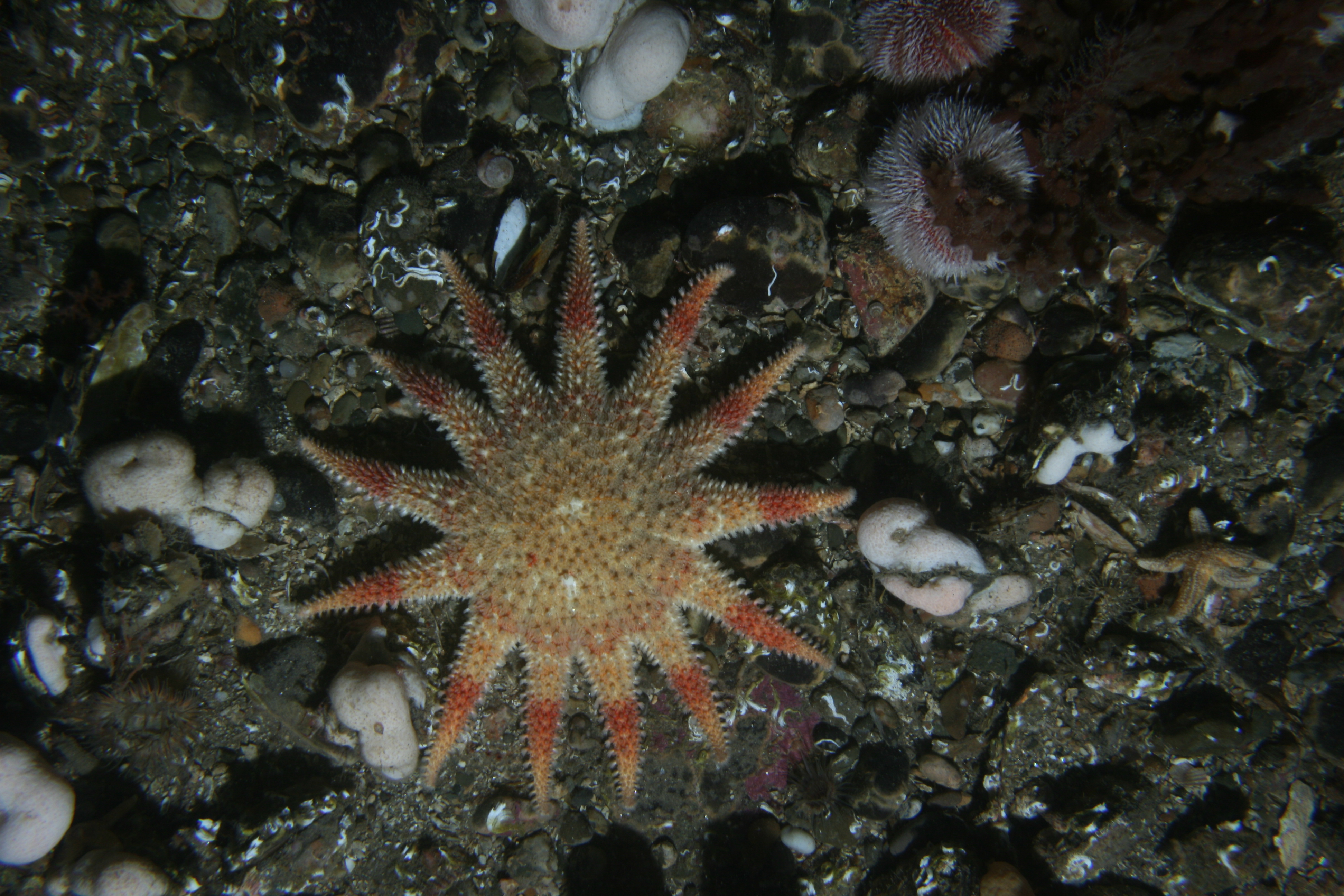


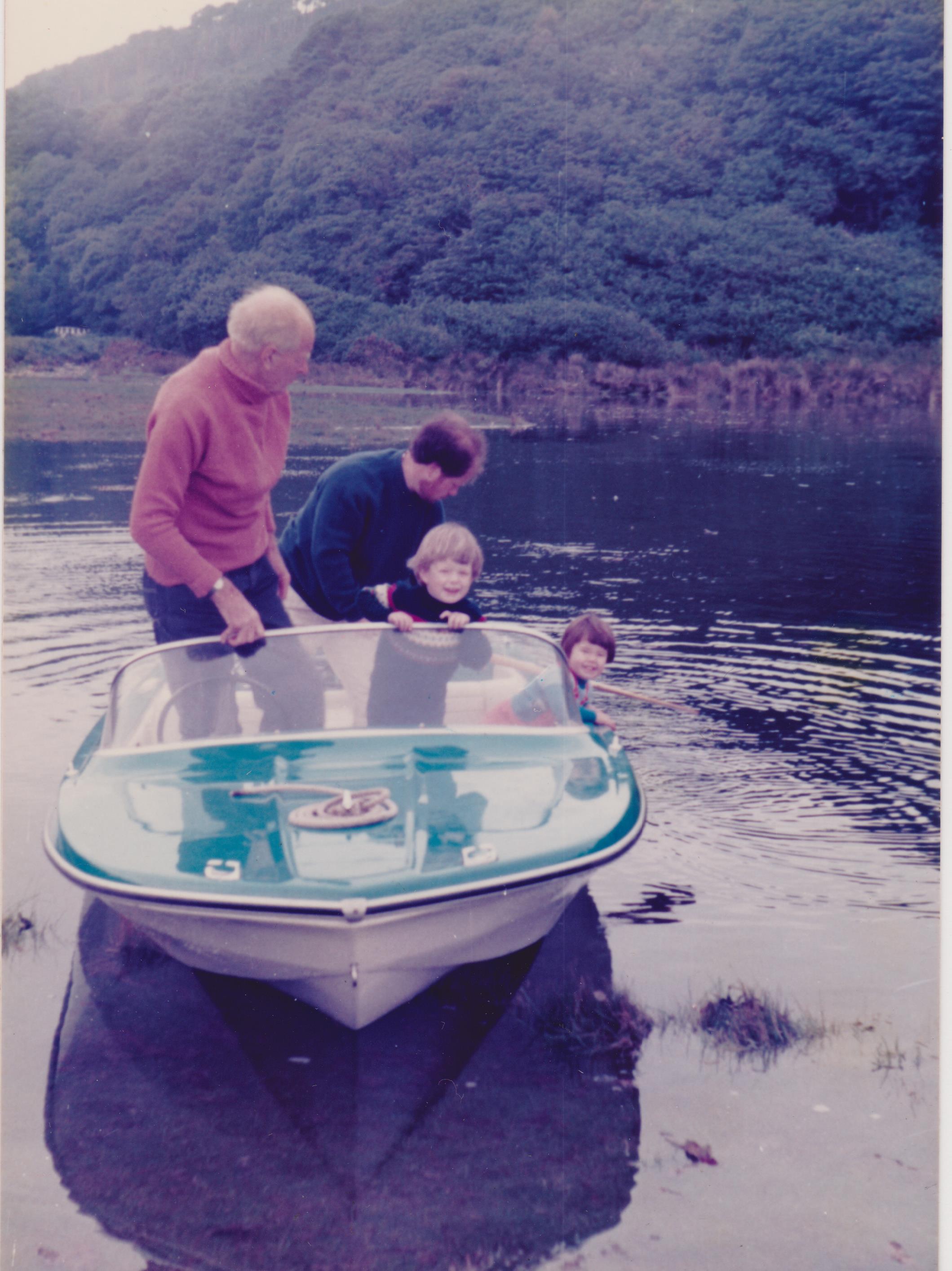


 Mike's Isle of Man swim 2019